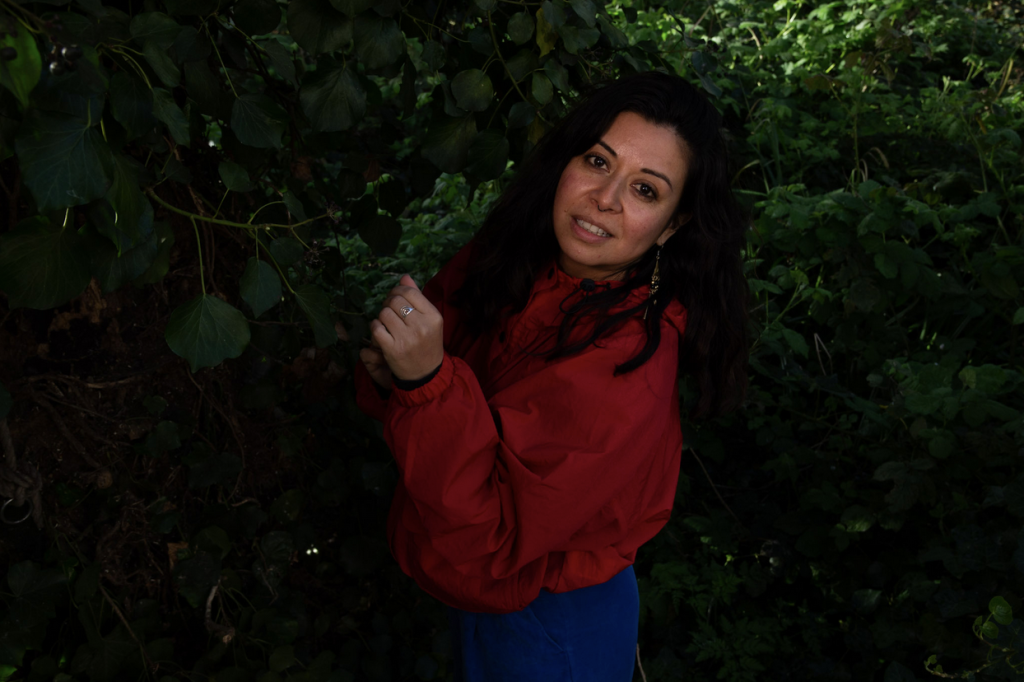
The focus of this workshop will be on the relation of sound and music to dreams and the unconscious, psychedelic awareness, and auditory narratives or fictions. Inigo and Maeve will be joined this time by Viviana Caro, a sound artist and PhD researcher whose focus is on psychedelic-like states through immersive sound. Her work brings together sonic art, neuroscience, and music psychology to explore how sound can shape emotional and perceptual states.
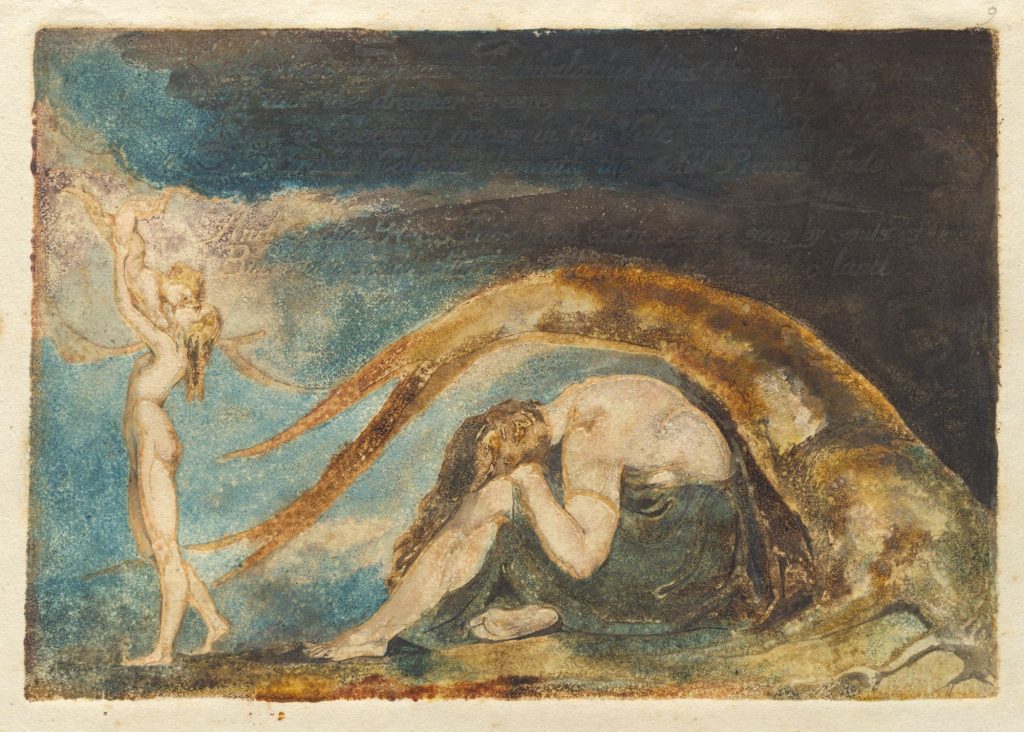
In Old English, the word drēam was used to describe noise, joy, or music, and it was only from its mixture with the Old Norse word draumr, which referred to sleep imagery, that it got its currrent meaning. There’s an obvious connection here with psychedelic states, which may also involve visions, or waking dreams. Looking again at the etymology, psychedelia, from a combination of the Greek psyche (mind) and dēlos (manifest), was coined to point to the idea of the mind revealing itself to itself.

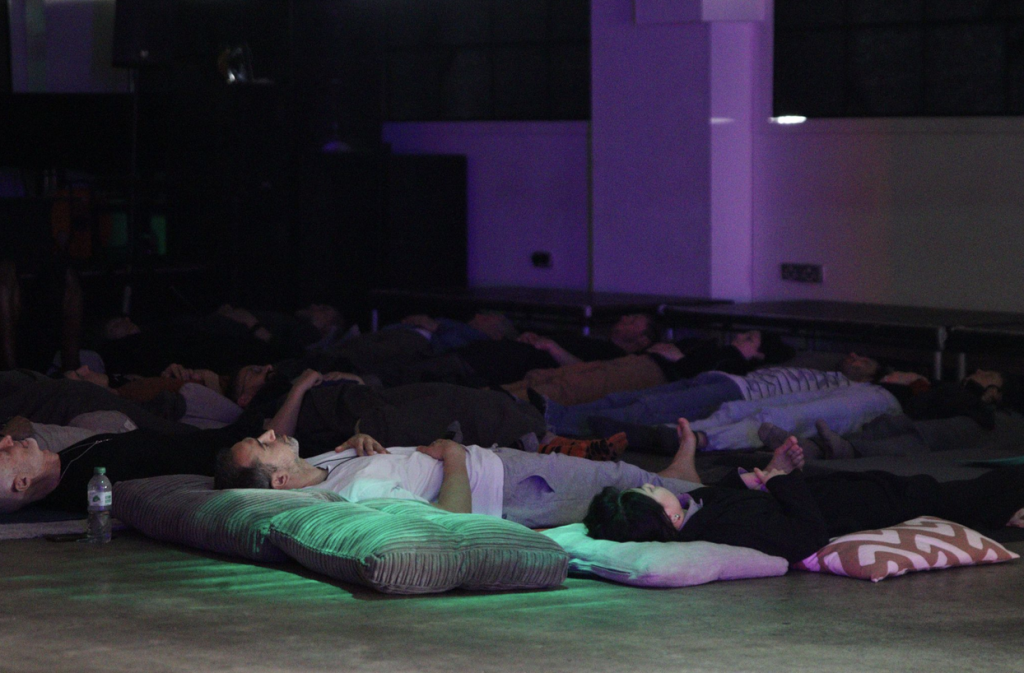
There is something similar in the practice of attentive or intentional listening, where auditory consciousness becomes audible to itself. Music has a long and powerful relationship with altered states, with the capacity to induce trance, ecstasy, dreamlike perception, and even psychedelic-like states. We are also interested in the role of imagination and the importance of intention in helping us access and navigate these states. Through sustained practice, attentive listening can become more than an aesthetic experience: it can become a technique for cultivating resilience, deepening self-knowledge, and transforming the way we move through life. Finally, dreams and psychedelic experiences often involve strange, inscrutable narratives, and music too can be understood as a medium that tells stories, not always through words, but through atmosphere, tension, memory, and sensation.
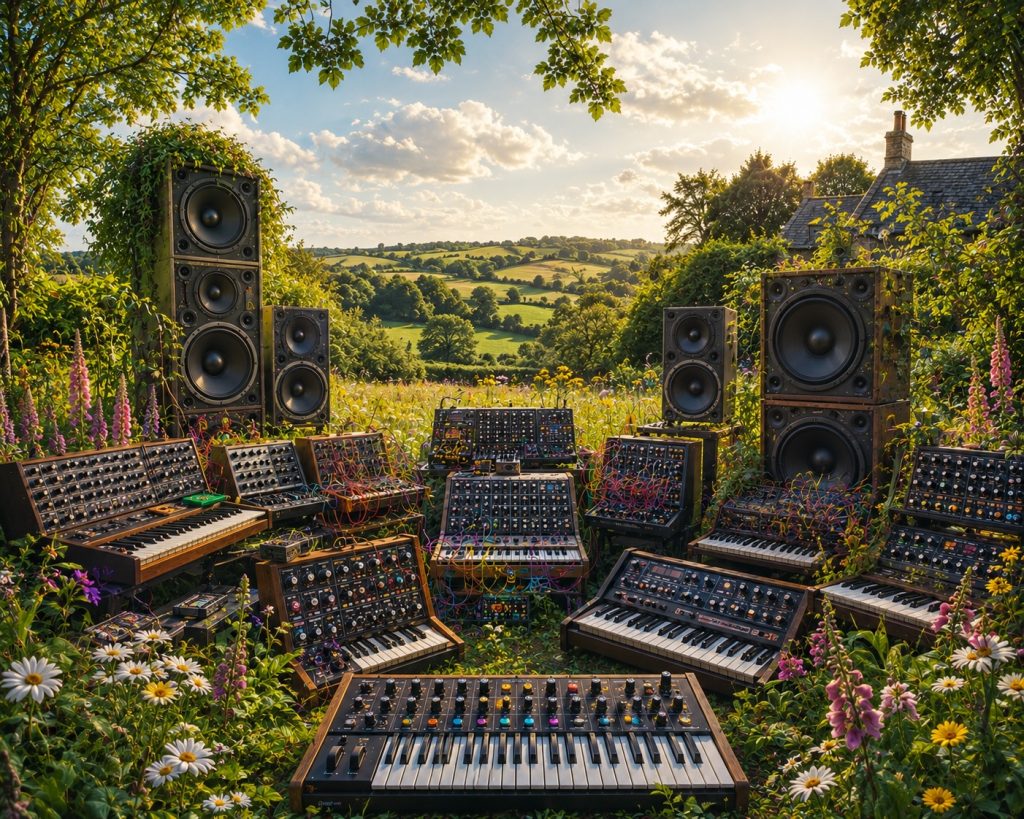
We’ll be interested in exploring all these overlapping semantics, including ancient traditions of dreamwork and shamanic healing, modern theories of the unconscious, and contemporary neuroscientific explanations of conscious and unconscious cognition, and psychedelic states. Inigo will start the theory off with an introduction to past and contemporary explanations of dreaming, the unconscious, and altered states, and then go into what he calls psychedelic listening. Maeve will give a masterclass on building musical narratives using hypnotic synth sounds and samples of spoken word. Then Viviana will lead a session on her theory and practice of inducing acoustic states of consciousness. On the practice side of the workshop we’ll together explore radiophonic work and the production of ambient or atmospheric soundscapes. We’ll make oneiric music using dreamy synths, processed field recordings, wonky vocals and warped spoken words in an attempt to induce psychedelic listening or acoustic states of consciousness.
We feel this work is especially important in the current renaissance of psychedelics. The power of psychedelic experiences is undeniable: they can open extraordinary doors into different ways of sensing, knowing, and understanding reality. They can help us encounter ourselves more deeply, connect with the unconscious, and explore some of the mysteries of existence. At the same time, these states need care. When they are approached without the right conditions, preparation, support, or intention, they can also feel destabilising or overwhelming. This is why we are interested in exploring different ways of accessing altered states of consciousness, such as through music. We want to ask whether their healing and transformative potential belongs only to the substance itself, or whether it also lives in what we meet, feel, discover, and integrate within the altered state, whatever path brings us there.
We can’t wait to host you on this journey!
Practical Details
SSTRAPP is held at a fantastic venue called Bidston Observatory Artistic Research Centre (BOARC).
BOARC is an anti-racist, trans-inclusive, intersectional feminist space where we welcome everyone who abides by this accountability agreement.
There are no requirements for attending SSTRAPP, everyone is welcome, whatever their knowledge, abilities, etc., and the theory and practice should be accessible for those with no background in them.
We recommend arriving at BOARC on Thursday morning so we’re ready to start working at 11am, but if you can’t make it then you can still join later, we’ll finish on Sunday afternoon. If you’d like to arrive the day before or stay some extra days that should be possible, just let us know so we can book you in for extra nights with BOARC (£30 per night).
The cost for participating in the workshop includes three nights accommodation and breakfast, lunch and dinner on all four days.
Workshop fee: £444
There are a limited number of lower priced places available, so if you’d like to come but can’t afford this price because of genuine economic hardship then please get in touch and we’ll see what we can do to make it possible for you.
Since its inception SSTRAPP has always been about making sonic and somatic theory and practice available outside of increasingly expensive and restrictive academic institutions, and we’re strongly committed to including people at the intersections of forms of oppression crossing class, race, gender, ability, etc.
If you’d like to join, please get in touch by sending an email including some details about your background and interest to sstrapp@proton.me