April 23-26 2026
With Inigo, Maeve and Billie
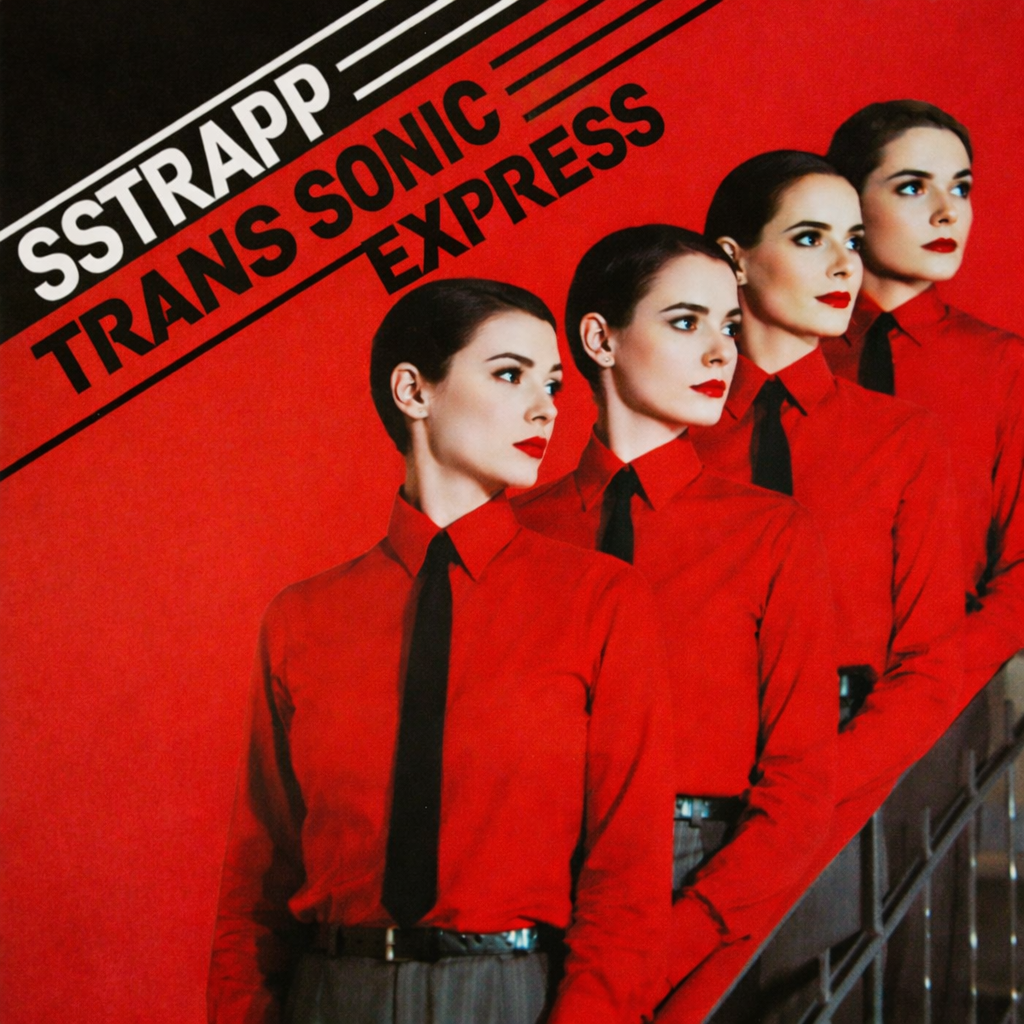
This workshop is dedicated to transitions, with the theory part looking into the Political Economy of Transness, and the practice part exploring sonic, auditory and musical transitions. Facilitators Inigo and Maeve are delighted to be joined this time by committed SSTRAPPer Billie Cashmore, a brilliant philosopher who has worked extensively on the philosophical and political implications of transness, and also a banging DJ. As usual, we’ll do theory in the mornings, followed by collecting, listening, and sound practice sessions in the afternoons and evenings.
The Political Economy of Transness: Beyond Inclusion and Exclusion
For the theory part Billie will present her thoughts on transness, and we’ll discuss the ideas together in groups. Here is a description of the issues that Billie wants to focus on: In liberation movements in general, and trans liberation in particular, the question of the extent of the value of inclusion in society repeats, with remarkably little variation, at every moment. Inclusion seems usually to grant too much to patriarchal society, and an absolute resistance to society seems to draw borders around a supposedly pure subject of transness that does not exist, and would have little effect even if it did. What would it mean to consider transness as a moment in the circuit of social reproduction? How does trans time syncopate the meter of capital? What would it mean to play on this social polyrhythm, both in and beyond music, and indeed art? What, in short, are the political economies of transness, its times, values, relations, performances? In the end, we might hope to find a materialist concept of transition, beyond the individuality of identity, expression, performative constitution, and the body. All this is so many ways of preparing the ground for a trans communism, not merely inclusive of but bent(-out-of-shape) by transition.
Sonic, Auditory and Musical Transitions
In the practice parts of the workshop we’ll explore sonic, auditory and musical transitions in the broadest sense of the concept. That means investigating how sounds change over time, from onset to decay, and how we can play with their evolution through the use of synthesizers, effects pedals, looping, spatialized diffusion, material resonance and physical space. We’ll listen to various musical transitions, such as loud-to-quiet, tonal-to-noise, noise-to-beats etc., and practice making them together in groups. Maeve and Billie will give a masterclass on DJ mixing, showing how to make smooth and abrupt transitions sound sick af, then you’ll all have ample time to try out the techniques and tricks yourself. We’ll listen to and practice drumming transitions and polyrhythms, probing into how beats transition horizontally and vertically. We’ll work on auditory transitions, by redirecting attention to specific aspects of sound, by listening with blindfolds, and by sounding out how physical space, resonant materials and spatializing software change auditory profiles. We’ll try out echolocation and find out how well you can navigate by interpreting sound reflections from environmental surfaces. We’ll do some group vocalisation work focusing on large and small transitions, we’ll discover how far the voice can change on its own and using voice modulation effects. Finally, we’ll work towards performances in small groups that play out and develop some of the transitions that we’ve studied.
Practical Details
SSTRAPP is held at a fantastic venue called Bidston Observatory Artistic Research Centre (BOARC).
BOARC is an anti-racist, trans-inclusive, intersectional feminist space where we welcome everyone who abides by this accountability agreement.
There are no requirements for attending SSTRAPP, everyone is welcome, whatever their knowledge, abilities, etc., and the theory and practice should be accessible for those with no background in them.
We recommend arriving at BOARC on Thursday morning so we’re ready to start working at 11am, but if you can’t make it then you can still join later, we’ll finish on Sunday afternoon. If you’d like to arrive the day before or stay some extra days that should be possible, just let us know so we can book you in for extra nights with BOARC (£30 per night).
The cost for participating in the workshop includes three nights accommodation and breakfast, lunch and dinner on all four days.
Workshop fee: £444
There are a limited number of lower priced places available, so if you’d like to come but can’t afford this price because of genuine economic hardship then please get in touch and we’ll see what we can do to make it possible for you.
Since its inception SSTRAPP has always been about making sonic and somatic theory and practice available outside of increasingly expensive and restrictive academic institutions, and we’re strongly committed to including people at the intersections of forms of oppression crossing class, race, gender, ability, etc.
If you’d like to join, please get in touch by sending an email including some details about your background and interest to sstrapp@proton.me